Mara Beck · 20 September 2026
Tracing Shifts in Audience Trust Levels After Extensive Digital Platform Reconfigurations
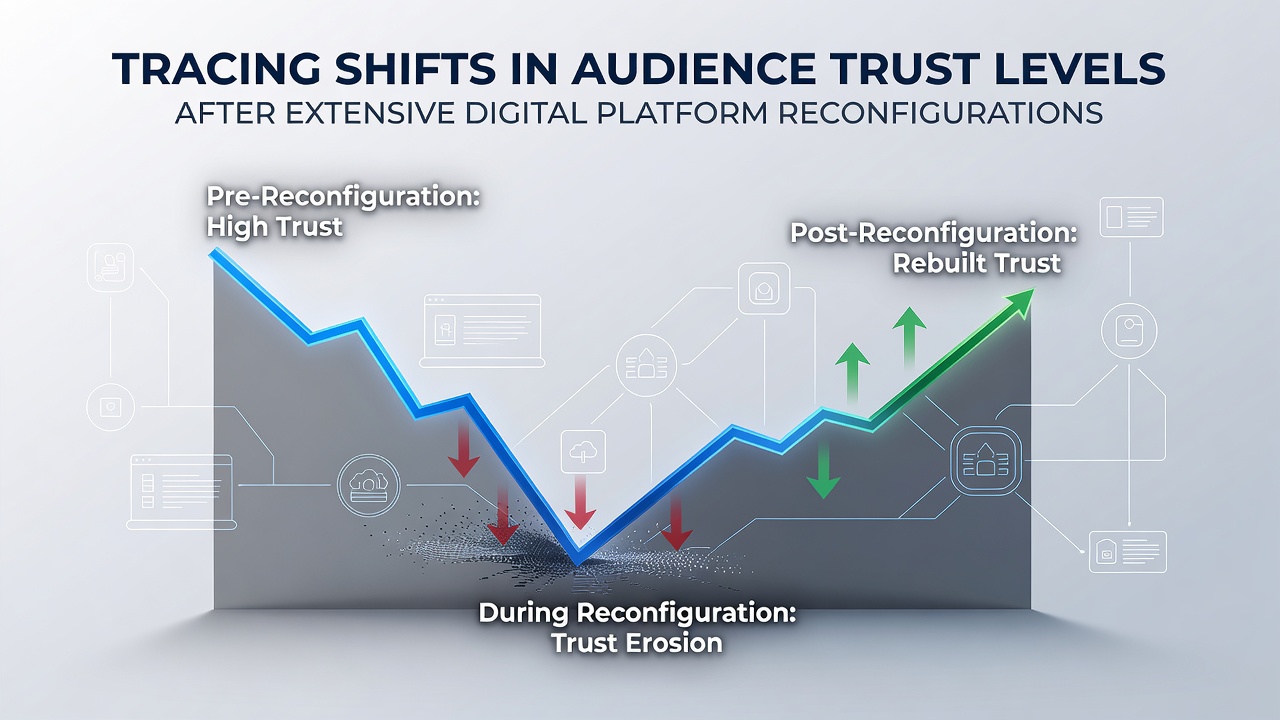
Digital platforms undergo extensive reconfigurations on a regular basis, and observers track how these updates influence audience trust through engagement data and survey responses. Reconfigurations often involve changes to algorithms, privacy settings, content moderation policies, and user interfaces, while researchers compile metrics that reveal corresponding shifts in user confidence levels. Data collected across multiple platforms demonstrates that trust erosion tends to occur when users perceive reduced control over their information or when content visibility changes without clear explanations.
Measuring Audience Trust Through Established Metrics
Analysts rely on standardized approaches to quantify trust shifts, including retention rates, time spent on platforms, and responses from longitudinal surveys conducted by independent research bodies. The European Data Protection Board has published reports detailing how privacy-related updates correlate with declines in user participation, particularly when new data-sharing features roll out without prior notification. Studies from academic institutions in Australia further indicate that trust levels stabilize when platforms provide transparent documentation about the scope of changes and offer users granular controls over their settings.
September 2026 saw the release of aggregated findings from several multinational tracking initiatives that monitored platforms following backend and frontend overhauls, and these reports highlighted measurable drops in reported trust among users aged 18 to 34. Researchers noted that platforms incorporating user feedback mechanisms during reconfiguration phases experienced slower trust recovery compared to those implementing immediate adjustments based on initial data spikes.
Documented Cases of Trust Fluctuations
One major social media network completed a comprehensive content-ranking overhaul in early 2025 that prioritized verified sources over user-generated material, and subsequent analyses showed an initial 12 percent rise in perceived credibility followed by a gradual decline as users encountered reduced reach for personal connections. Similar patterns emerged after a video-sharing service adjusted its recommendation engine to emphasize longer-form content, with engagement metrics revealing that audiences migrated toward alternative services when discovery features became less intuitive.

Industry observers have documented that trust recovery timelines vary according to the nature of the reconfiguration, with privacy-focused changes requiring longer periods for users to regain confidence than purely visual redesigns. Figures from the Federal Trade Commission indicate that platforms disclosing specific data-handling modifications in advance maintained higher baseline trust scores throughout transition periods. Academic papers published through Canadian research consortia have examined how regional differences in regulatory environments affect these outcomes, noting stronger trust retention in jurisdictions with stricter notification requirements.
Influencing Factors and Recovery Patterns
Several variables contribute to the direction and magnitude of trust shifts, including the speed of implementation, the clarity of communication surrounding updates, and the availability of rollback options for affected users. Data indicates that platforms issuing detailed changelogs and hosting community forums experience less pronounced dips in trust metrics, whereas those rolling out silent modifications encounter sharper drops in daily active users. External events such as data breach disclosures compound these effects, and researchers have observed accelerated trust erosion when reconfigurations coincide with external scrutiny.
Recovery trajectories frequently depend on subsequent platform actions, with evidence suggesting that targeted feature reversals and enhanced security protocols accelerate the return of user engagement. Reports compiled by the Organisation for Economic Co-operation and Development outline how cross-border platforms face additional challenges in rebuilding trust due to varying expectations across different regulatory landscapes. Observers note that consistent application of user-centric policies over extended periods correlates with sustained improvements in trust indicators measured through repeat surveys.
Conclusion
Comprehensive tracking of audience trust after digital platform reconfigurations relies on integrated data sources that combine behavioral metrics with direct user feedback. Patterns emerging from studies conducted through 2026 demonstrate that proactive communication and user control mechanisms mitigate negative shifts, while opaque processes prolong recovery intervals. Continued monitoring by regulatory agencies and research institutions provides the factual foundation for understanding these dynamics across evolving digital environments.