Ulrich Beck · 4 October 2026
Tracing the Evolution of Collaboration Tools Within Specialized Industry Hubs
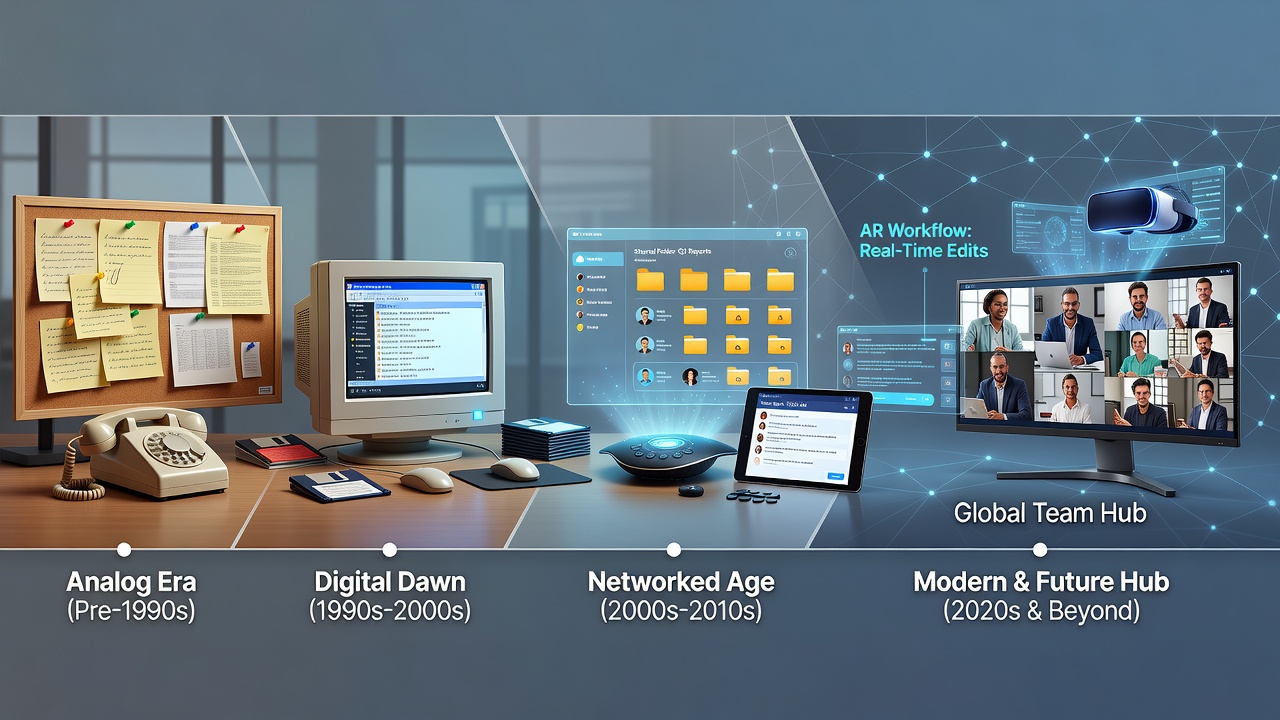
Specialized industry hubs such as biotechnology clusters in Boston or advanced manufacturing centers in Germany's Ruhr region have long relied on tailored collaboration mechanisms to coordinate complex projects across multiple organizations, and researchers have documented how these environments accelerated the adoption of purpose-built tools from the late twentieth century onward while data from academic studies reveal steady integration of digital systems that supported real-time data sharing among engineers, scientists, and supply chain partners.
Foundations in Pre-Digital Coordination
Before widespread computing, collaboration in hubs depended on physical meetings, shared filing systems, and courier networks that moved blueprints and specifications between facilities, yet observers note how these methods limited speed in fast-moving sectors like aerospace where teams at NASA centers exchanged technical documents through centralized repositories that evolved into early electronic mail systems by the 1980s, and industry reports indicate that such transitions reduced project delays by enabling simultaneous annotations on shared documents across sites separated by hundreds of kilometers.
Transition to Networked Platforms
The 1990s brought local area networks and intranets that connected firms within single hubs, allowing secure exchange of proprietary data while maintaining compliance with sector regulations, and figures from government innovation agencies show that adoption rates climbed sharply once standards like TCP/IP became standard in places such as Singapore's manufacturing parks, where automotive and electronics suppliers synchronized production schedules through shared databases that replaced paper-based workflows entirely.
By the early 2000s, web-based project management applications entered these ecosystems, offering version control and task assignment features that suited multi-company consortia working on joint ventures, although integration challenges persisted until middleware solutions bridged legacy systems with newer interfaces, and studies from Canadian research institutions highlight how these platforms supported the growth of clean energy hubs by coordinating turbine design iterations among dispersed engineering groups.
Expansion Through Cloud and Mobile Integration
Cloud computing marked a significant acceleration point around 2010 when specialized hubs gained access to scalable storage and processing that allowed simultaneous editing of complex models without local hardware constraints, while telecommunications data indicates mobile apps extended these capabilities to field technicians who updated status reports from remote sites directly into central dashboards, and one Australian government report on industry digitalization notes that manufacturing clusters recorded measurable productivity gains once mobile synchronization became reliable across supply chains.
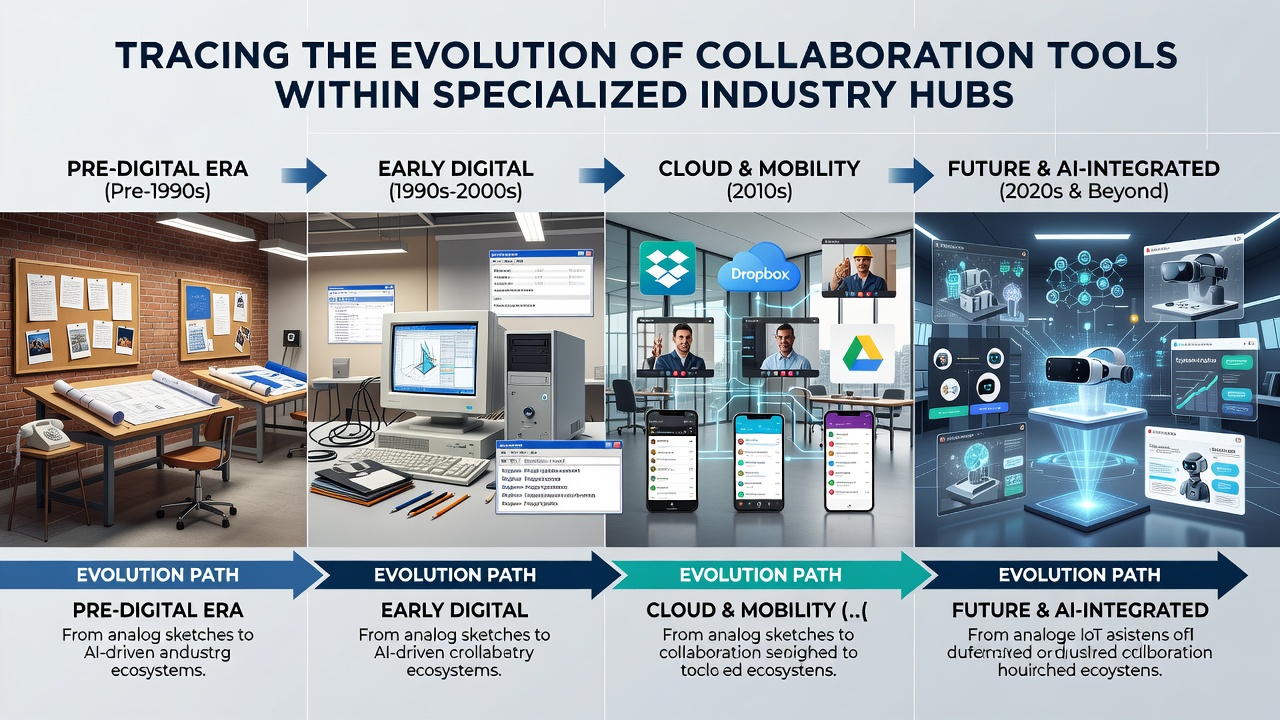
Platforms such as Microsoft Teams and Slack found quick footholds in technology and life sciences hubs because they combined chat, file sharing, and third-party app connections into unified workspaces, yet customization remained essential for sectors requiring strict audit trails or specialized visualization tools, and data collected by European research networks shows that adoption patterns differed between pharmaceutical clusters focused on regulatory documentation and automotive hubs prioritizing 3D model collaboration.
Current Developments and Industry-Specific Adaptations
Artificial intelligence layers now overlay many collaboration suites used in specialized hubs, providing automated transcription of meetings, predictive scheduling, and anomaly detection in shared datasets, while experts at academic centers observe that these enhancements prove particularly valuable in October 2026 as new regulatory frameworks for data sovereignty take effect across multiple regions, prompting hubs to adopt localized AI models that keep sensitive information within jurisdictional boundaries during joint research initiatives.
Virtual and augmented reality environments have also entered pilot stages in engineering and design clusters where teams review prototypes in immersive spaces that simulate physical assembly lines, and reports from industry organizations document reduced travel costs alongside faster iteration cycles when geographically separated partners interact through these systems, although bandwidth requirements continue to shape deployment decisions in less connected regions.
Conclusion
Collaboration tools within specialized industry hubs continue to advance through successive layers of connectivity, intelligence, and sector customization that reflect both technological progress and the operational demands of clustered enterprises, and ongoing research from varied global sources confirms that these systems support sustained innovation by enabling secure, efficient coordination across organizational boundaries while adapting to emerging standards and infrastructure capabilities.